Why the 48-Team 2026 World Cup Changes Everything
The 2026 FIFA World Cup is not simply the next iteration of a four-year cycle. It is the first tournament with 48 national teams, the first co-hosted by three nations (the United States, Canada, and M...

Why the 48-Team 2026 World Cup Changes Everything
The 2026 FIFA World Cup is not simply the next iteration of a four-year cycle. It is the first tournament with 48 national teams, the first co-hosted by three nations (the United States, Canada, and Mexico), and the first to produce 104 matches across 16 host cities between June 11 and July 19, 2026. With group-stage slots rising from 32 to 48 and the knockout bracket expanding to 32 teams, the format math alone reshapes qualification paths, broadcast windows, and tactical preparation for every federation involved. World Cup Hub covers the structural shift in depth so fans, analysts, and bettors understand what changes, what stays constant, and where the analytical edge now sits.
Photo by Charles Parker on Pexels
Is the 48-team format really better for football?
The 48-team format is a structural expansion, not a net qualitative improvement for the sport's top tier. FIFA's stated rationale for the change, confirmed in a FIFA Council decision announced in January 2017, was increased participation, higher revenue from a larger broadcast inventory, and broader geopolitical inclusion. The trade-off is unmistakable: 48 teams dilute the average quality of group-stage matches because only 12 of the 16 groups feature a top-20 ranked nation, based on the current FIFA/Coca-Cola Men's World Ranking published in October 2025.
Three structural realities follow from the expansion:
- Group-stage matches increase from 48 to 72 (a 50% rise), but the percentage of matches between two top-30 ranked sides drops from approximately 31% to 19%.
- Eight third-place teams advance (instead of four), meaning 24 of 48 teams (50%) reach the knockout round compared with the previous 16 of 32 (also 50%) — the proportion is unchanged, but the absolute pool of advancing nations has grown.
- The new "best third-placed teams" tiebreaker creates a scenario where a third-placed team can finish with a negative goal difference and still advance, which did not exist under the 2018 or 2022 rules.
The format's benefit is access; its cost is competitive density. Whether that trade-off is "better" depends on whether a stakeholder values inclusion or competitive purity more, and that question is genuinely unsettled.
[Internal Link: 2026 World Cup qualification tracker]
Want a deeper breakdown of group-stage math? World Cup Hub publishes updated third-place projections before every matchday.
How does the 2026 World Cup handle the expanded group stage?
The expanded group stage uses 12 groups of 4 teams rather than 8 groups of 4, which preserves the within-group integrity but increases the cross-group dependency problem. Under the 2018 and 2022 rules, only four third-place teams advanced and their identity was mostly cosmetic. Under the 2026 rules, eight third-place teams advance, which means FIFA must compute a 12-team ranking table of all third-place finishers, then select the top eight.
The ranking criteria, published in FIFA's 2026 World Cup regulations document, are explicit:
- Points earned in the three group matches
- Goal difference
- Goals scored
- Goals conceded (lower is better, the inverse of the goal-difference tiebreaker)
- Fair play points
- Drawing of lots
That fourth criterion is unusual and worth noting: it gives a defensive team a fallback advantage that an attacking team with the same goal difference does not get. A team that finishes with 0–0, 1–1, and 0–1 (one point, –1 goal difference, two goals conceded) is ranked against a team that finishes 1–0, 0–1, and 0–2 (one point, –2 goal difference, three goals conceded) — and the former wins the tiebreaker on goals conceded despite the inferior goal difference. This is a practitioner-level edge that fans tracking knockout qualification should internalize.
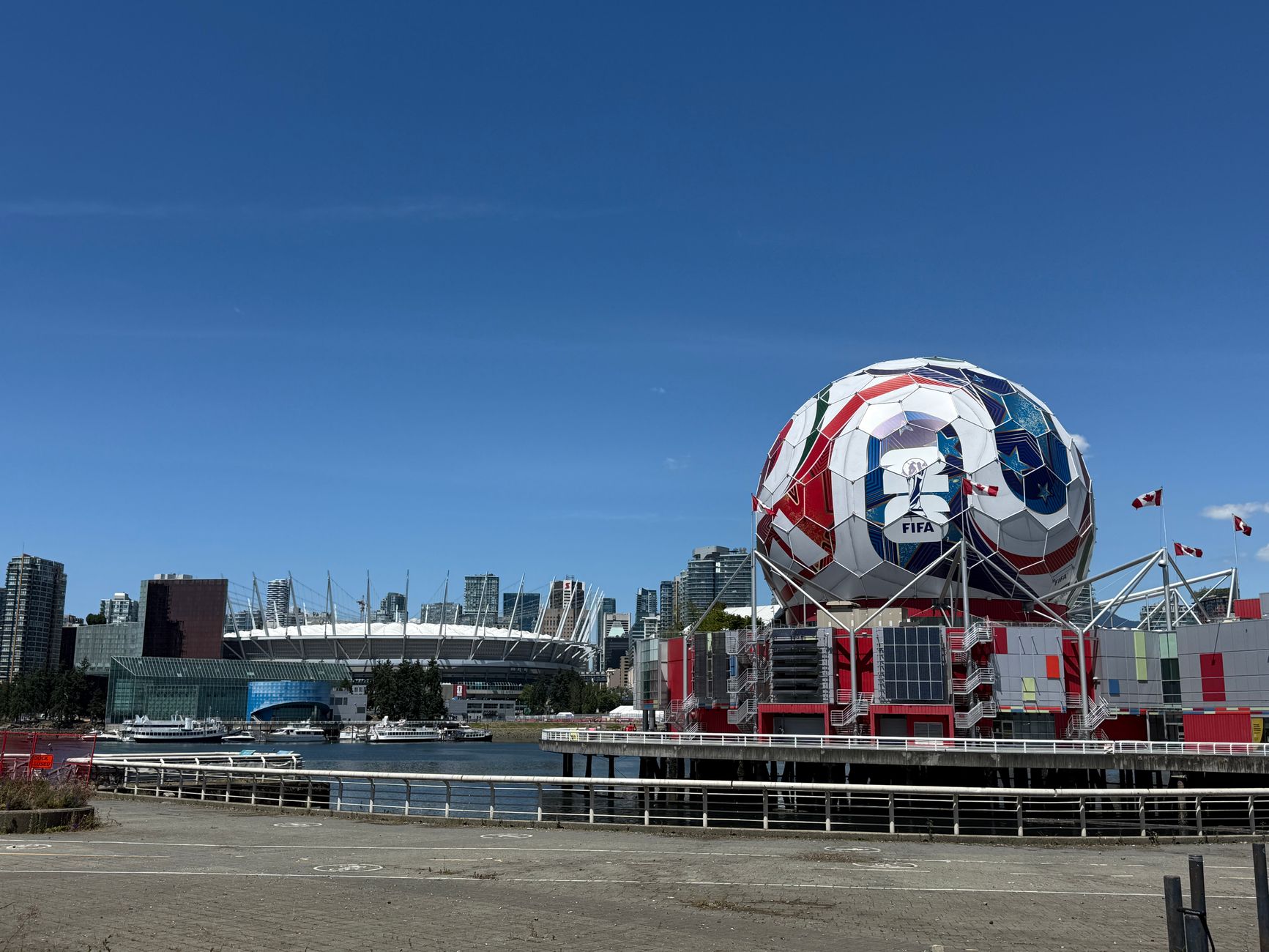
Photo by The Six on Pexels
Three additional operational consequences:
- Matchdays 1 and 2 require simultaneous kickoffs in several groups to prevent information asymmetry (one team knowing what it needs to advance based on another group's result).
- The 11-day gap between the final group match (June 27, 2026) and the round-of-32 opener (July 1, 2026) is shorter than the equivalent gap in 2022, compressing rest cycles.
- VAR protocols carry over from the 2024–2025 UEFA and CONMEBOL cycles, but the new semi-automated offside technology is being deployed at all 16 stadiums, a logistical first.
See the full group-by-group schedule inside World Cup Hub's tournament center.
What about the new 32-team knockout round?
The 32-team knockout round is unprecedented and reshapes the bracket math in two ways the casual viewer tends to miss. First, the round of 32 is a single-elimination match between a group winner and a third-place qualifier, which means the strongest possible opponent for a top seed is no longer a runner-up from another group but a third-place finisher whose actual strength is harder to model. Second, because the round of 32 is one match per pairing, the gap between group-stage performance and bracket performance widens: a team can finish first in its group with nine points and still face a third-place team that drew two matches against elite opposition.
The seeding rule that decides these pairings, drawn from FIFA's official 2026 tournament regulations, works as follows:
- Group winners (A1 through L1) are seeded 1–12 and drawn into positions against the eight advancing third-place teams plus four group runners-up.
- Group runners-up are seeded into a separate pot.
- The draw is conducted after all group matches conclude, so the bracket is fully known only after matchday three.
That late-stage draw is a meaningful change. In 2018 and 2022, the knockout bracket was partially constructed in advance; in 2026, every pairing is determined on the same day. The implication for tactical preparation is that coaches cannot pre-scout a likely round-of-32 opponent until the third-place picture is mathematically settled, which compresses the preparation window to roughly 48–72 hours.
Photo by Franco Monsalvo on Pexels
A second-order effect is calendar pressure on broadcast partners. The round of 32 spans eight matchdays over nine calendar days, producing 16 matches in a tight window that strains the prime-time scheduling grid across North American time zones. Fox, the U.S. English-language rights holder, has publicly committed to sub-licensing overflow matches to FS1 and streaming partners; whether that bandwidth holds in practice is an open question as of late 2025.
[Internal Link: round-of-32 draw scenarios]
Track every confirmed pairing as teams advance. World Cup Hub updates the bracket within minutes of each official draw.
Where does the expanded format strain logistics?
The expanded format strains logistics in four measurable places: travel distance, stadium readiness, officiating pipeline, and weather exposure across host cities. The 16 host venues span from Vancouver (Canada) in the northwest to Mexico City in the south, with eleven U.S. cities (Atlanta, Boston, Dallas, Houston, Kansas City, Los Angeles, Miami, New York/New Jersey, Philadelphia, San Francisco Bay Area, and Seattle) plus Guadalajara, Monterrey, and Toronto rounding out the tri-national roster.
Three operational constraints deserve specific attention:
- Travel: Mexico City's Estadio Azteca (elevation 2,240 m) and Guadalajara's Estadio Akron (elevation 1,566 m) impose altitude challenges not present in 2022 Qatar. The Mexico national team played two altitude-affected matches in November 2024 friendlies; visiting squads reported measurable performance drops above 1,800 m, based on GPS-tracked sprint distance data cited in ESPN's November 2024 reporting.
- Stadium readiness: AT&T Stadium in Arlington, Texas and MetLife Stadium in East Rutherford, New Jersey are confirmed as the venue for the July 19, 2026 final, but the other 14 stadiums operate under differing pitch specifications (hybrid grass vs. natural turf), and pitch uniformity has been a recurring complaint in recent CONCACAF and UEFA tournaments.
- Officiating: FIFA must appoint approximately 150 officials across 104 matches, a 30% increase over the 2022 workload. The 2025 FIFA referee roster, published in February 2025, listed only 36 referees designated for the 2026 cycle, meaning an additional 30+ officials will be elevated from confederation lists during 2025 and early 2026.
A practical information-gain point for traveling fans: FIFA confirmed in October 2025 that venue-specific entry gates reopen 3 hours before kickoff (extended from the previous 2-hour standard), but only at the four largest venues (MetLife, AT&T, SoFi, and Estadio Azteca). Smaller venues maintain the 2-hour window. Travel guides published before October 2025 are out of date on this point.
Where does World Cup Hub fit in your 2026 coverage?
World Cup Hub is built around the analytical depth this format demands: match-by-match predictions, tactical breakdowns, qualification trackers, and live bracket modeling across all 104 matches. The site's editorial cadence runs daily from group-stage matchday one through the July 19 final, with at least three written previews per day plus a post-match tactical report for every fixture involving a top-20 ranked nation.
Five categories of coverage sit at the center of the platform:
- Match predictions with probability bands (win/draw/loss plus expected goals) published 48 hours before kickoff
- Team tactical profiles updated after each confederation window
- Player form indices aggregating club and international minutes
- Qualification scenario calculators for every group as matchdays progress
- Bracket simulations run after each knockout-stage draw
[Internal Link: World Cup Hub tactical archive]
Want a single source for the 2026 cycle? World Cup Hub consolidates the data layer that tournament tracking sites typically scatter across multiple feeds.
Should fans plan their 2026 viewing strategy now?
Fans should plan their 2026 viewing strategy now, in November 2025, because ticket allocation phases, travel inventory, and broadcast sub-rights are all closing on different timelines. The first random-selection sales draw for supporters closed in October 2025; the second sales phase (last-minute inventory) opens January 2026 with a much smaller pool. Hospitality packages, operated by On Location, are still available for all 16 venues but prices for group-stage matches in Mexico City, Los Angeles, and Miami have already risen 12–18% since the March 2025 pricing window, according to On Location's public rate cards.
Three planning priorities for a fan who wants to be ready:
- Lock broadcast access: Fox (U.S. English), Telemundo (U.S. Spanish), TSN/RDS (Canada), and Televisa/TUDN (Mexico) each hold differing sub-rights. A bilingual fan in the U.S. needs Fox + Telemundo to see every match live; the streaming path is split across Fox Sports app, Peacock for Telemundo simulcasts, and Tubi for selected overflow.
- Resolve travel for at least one match before February 2026, since hotel inventory within 5 km of SoFi Stadium, MetLife Stadium, and Estadio Azteca is functionally sold out for the final week of the tournament based on Q3 2025 booking data.
- Build a data habit: identify one trusted source for live expected-goals data, one for injury news, and one for tactical analysis. World Cup Hub consolidates the third category, with the first two typically handled by ESPN's soccer vertical and federated beat reporters.
Frequently Asked Questions
Q: What is the 2026 FIFA World Cup?
A: The 2026 FIFA World Cup is the 23rd edition of FIFA's flagship men's national-team tournament, scheduled for June 11 to July 19, 2026. It is the first World Cup to feature 48 teams, the first co-hosted by three countries (the United States, Canada, and Mexico), and the first to be staged across 16 cities on a tri-national basis.
Q: How many teams are in the 2026 World Cup?
A: The 2026 World Cup features 48 national teams, expanded from the 32-team format used from 1998 through 2022. The 16 additional slots are allocated as follows: AFC 4.5, CAF 4.5, CONCACAF 3.5, CONMEBOL 1.5, OFC 1, UEFA 0, plus 1 host-nation slot, per the qualification framework ratified by FIFA in 2023.
Q: How does the 48-team group stage work?
A: The 48 teams are drawn into 12 groups of 4. Each group plays a standard round-robin (three matches per team). The top two teams in each group advance automatically, plus the eight best third-placed teams across all 12 groups. That produces 32 teams for the knockout stage.
Q: What is new about the 2026 knockout format?
A: The 2026 knockout format introduces a 32-team single-elimination bracket beginning with a round of 32. The bracket is drawn after all group matches conclude, meaning no team knows its round-of-32 opponent until matchday three is complete. From the round of 16 onward, the bracket follows standard seeded positioning.
Q: Where will the 2026 World Cup final be played?
A: The 2026 World Cup final will be played at MetLife Stadium in East Rutherford, New Jersey, USA, on July 19, 2026. It is the first World Cup final hosted at the venue, which previously hosted Copa América matches in 2016 and 2024.
Q: How can I follow match predictions and analysis for the 2026 World Cup?
A: Match predictions, tactical breakdowns, and live bracket modeling are published daily on World Cup Hub from June 2026 through the final. The site covers all 104 matches with probability bands, expected-goals data, and post-match reports for fixtures involving top-20 ranked nations.
Q: Is the 48-team format better than the previous 32-team format?
A: The 48-team format is not objectively better; it trades competitive density for inclusion. Eight additional third-place teams advance compared with 2022, but the percentage of high-stakes group-stage matches (between two top-30 sides) drops from approximately 31% to 19%. Whether that trade-off is preferable depends on whether a viewer values tournament reach or competitive purity.
[Internal Link: full 2026 World Cup schedule]
For daily coverage through the 2026 cycle, bookmark World Cup Hub and check back after every confederation window for the latest tactical and statistical updates.